Author Archives: omarreece

Unknown's avatar

About omarreece

This is a personal weblog. The opinions expressed here represent my own and not those of my employer.

Guatemala—Observations (continued)

In many ways, people seem to worry less here. I see a family of 4 riding one motorcycle: the 2 year old straddling the gas tank in front of the driver followed by the 4 year old behind the driver with arms wrapped around the driver and a 4th person in the back—no helmets!

Time spent in the coffee shop or sitting outside talking seems to lack the schedule that my normal life puts on these things.

After dinner we retire to the hallway outside the eating hall to pay Chinese checkers or cards.

I’ve not met a single person that has seemed stressed; rather more of the opposite. Relaxed, friendly, and just present in the moment.

One of my many faults is thinking too far ahead, contingency planning and over thinking things. Observing Guatemalans teaches you that being present in this moment with this person in this conversation are what is most important.

Guatemala 2024–day 2

When I was a kid my father would invite veterinary students over to our house for dinner, especially international students who had to stay in Ames when everyone else went home.

I experienced the same hospitality when My parents, my sister, and I lived in Scotland—we were often the guests in the home of Ken Hosie, one of Dad’s co-workers.

Today we ventured out of the monestary where my son is living to go to his local coffee shop. It’s a good mile away, full of the hustle and bustle of the locals headed to their destinations in cars and motorcycles beeping their horns and dodging each other like that old game called Frogger.

Peyton introduced me to the owner, the barista, the waitress and the owner’s son named Tony. Everyone knew him.

Tony spent some time taking to us and I thanked him for welcoming Peyton into their “home”. He said, “that’s just what you do”. He went on to explain that several years ago he spent time in another country and no one really talked to him and he had no friends.

Paying it forward is Tony’s approach.

We can all ask ourselves how much out of our way have we gone for people visiting our country—I bet we all could do more.

Thank you Dad, Ken Hosie, and Tony for showing us the way.

She Was a Strong Force

(May 2024 update—this blog was previously in draft mode)

This week, Elizabeth, a neighbor from my youth, reached out to me to inform me of the passing of her mother, and her desire to contact my father to tell him the news. We exchanged messages and I felt a common bond with her as this week marked the passing of my mother 23 years ago.

“She was a strong force,” Elizabeth said about my mother.

When someone I know experiences a recent loss of a parent, I reflect back to my journey over the 23 years and think of it differently now than I had before.

No, she is a strong force.

I’m the carrier of her traits, her language, her mannerisms. This week I said, “you snooze you lose”, “get over it”, and “can’t get fat on a green bean” channeled from my inner Shirley.

My sons never met her. One asked today what she was like. An easy question, a complicated answer. She taught me to be self-reliant, gave me independence, and she loved me.

It was different then. We didn’t have constant contact about my whereabouts (just come home when the streetlights come on) or intervention when a neighbor kid pushed me down (you’ll get over it) or pay for that broken window at the school when I hit that home run (you will go into the principal’s office tomorrow and fess up).

But I think that was better in many ways. Life lessons that influence you, that you pass on in some way in your own life’s journey to those that you love.

Miss you mom.

Guatemala 2024

I’ve been on a blog hiatus for a long time. Many excuses, too many to count. Initially in my blogging days I don’t think I understood my purpose in creating content. I fell for the allure of a comment here or there, but I wasn’t until later that I realized it was also a creative outlet for me. I then fell into the trap of just simply not having much of a creative outlet, especially after the loss of my father in 2023.

Today, I arrived in Guatemala to visit my son who is working for the Benedictine Volunteer Corps (BVC). He and a driver drove 4 hours to pick me up at the airport and we drove 4 hours to where he is living.

I decided to use the time here to reflect and will try a few posts to dip my toe back into the creative pond.

Today Mario, the driver, was the inspiration. He loves what he does and he has an incredibly important job to keep people in his charge safe. But he makes it fun, and engaging. There was conversation, jokes, and stories. We were taking a detour in pretty remote gravel roads and he pretended he was just blindly following another car as if he was lost to get a reaction out of me.

It was fun. I concluded with my son that I need to enjoy things more often.

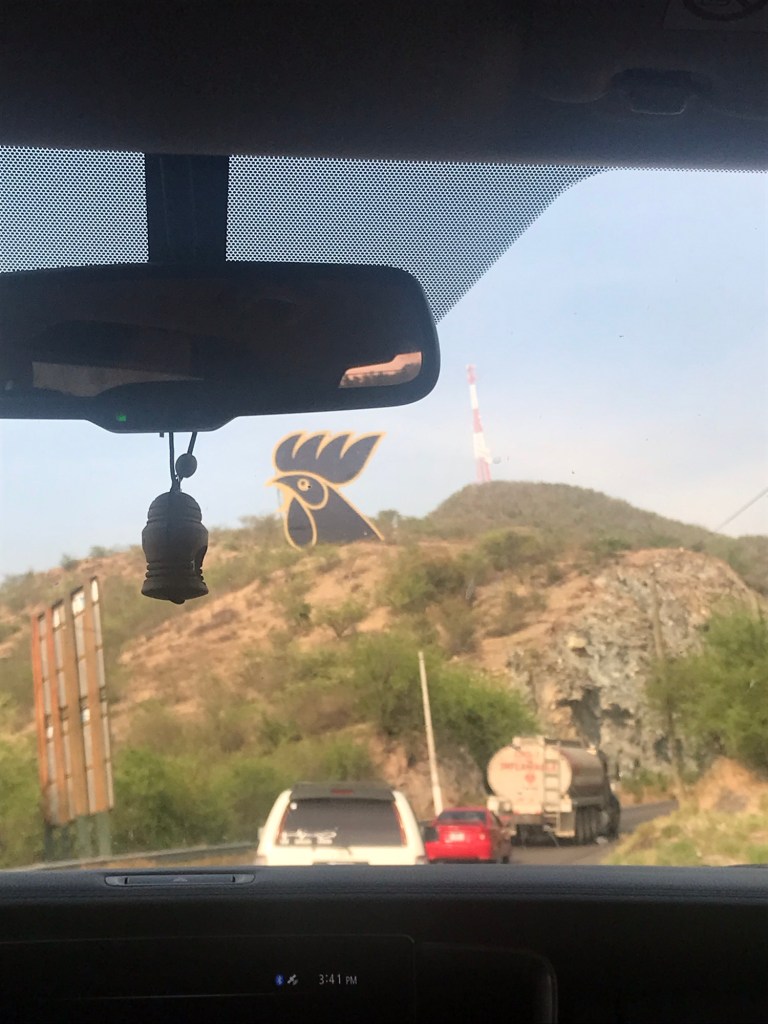
Thanks for modeling that Mario. Chicken Billboard taken by me from Mario’s car.

In Memory of My Dad

For this Father’s Day, I wanted to post the eulogy I had written about my Dad.

Every time a visitor backed out of Dr. Reece’s driveway at 219 South Russell in Ames, he would pretend it was an airplane backing away from the gate and he was the marshaller giving the signals and gestures, holding the imaginary flashlights, and moving his arms and hands to guide and shepherd the visitor towards a safe departure.  

And it wasn’t just visitors to the house that he guided.  Over the course of his 38-year teaching career, he guided over 2,000 Doctor of Veterinary Medicine (DVM) students through his courses and in an academic advising capacity.  This role was so important to him that he took the time to get to know every advisee, where they were from, what their parents did, and why they were pursuing a vocation in Veterinary Medicine.  It was an honor that the College of Veterinary Medicine at Iowa State named their academic advising award after Dr. Reece.  He was devoted to his family, too.  He and his wife Shirley raised 7 children and he had 24 grandchildren and 20 great-grandchildren.

With Dad, there was a certain way to do just about everything.  How to clean up a spill (blot it, don’t rub it); how to personalize a birthday card (write captions and funny sayings); how to make oatmeal (brown sugar and raisins mixed in—or else); how to top off a tank of gasoline (exactly at x.00, not .01); and how to make people feel important (know their name).

Nicknaming was his thing.  These varied from the simple (Tibbers), to alliteration (Tibbers and Toot).  More advanced versions took the form of rhymes (The Raina in Spaina falls mainly on the plaina) or (Noah, Noah, Gerboa) or (Kellen, Kellen, Ferninand Megillian).

He taught us that chores were important and he had a tireless work ethic.  If he came and visited, you always arranged for a project to do.  I remember planting a tree with him at my first house, both of us wearing our overalls (which he called the Belgian Tuxedo), railroad cap, and Red Wing steel toed boots.  Graduations, especially, were also very important to him.  He’d always ask if they were going to play the pomp and circumstance.  He tried very hard, when he was able, to attend as many graduations as he could.

He loved Ames.  A few weeks back I asked him what city had the best tasting water and he said, “Ames, Iowa”.  Dad only really knew 2 colors—Cardinal and Gold.  He said that his 2 favorite teams were Iowa State and whomever was playing Iowa.  And he meant it.  For over 43 years he attended almost every Iowa State Football game and insisted—even during the really bad years—to stay until the clock hit 0.00.  And he wasn’t a fair-weather fan, either.  Rain, snow, sleet, or hail he’d wear his overshoes and “gear” and walk over to the stadium.  Once he developed a theory that if he brought a piece of cardboard from home, and placed it on the ground and his feet on top of it, that it would keep his feet warmer.  I didn’t have the heart to debate that theory!

Dad always said he was proud of his parents, his agricultural background, and his family.  He loved teaching Veterinary Medicine and was a life-long learner.  When he was in his 80’s, I had asked him what he wanted inscribed on a brick to commemorate him and he simply said: “Still, I am learning.”

He leaves behind an incredible family as evidenced by the sheer number of people here tonight.  Each of you carries a memory of him.  Keep that memory but also use it to inspire yourself to create those same types of memories for your families.  Say his sayings, tell his stories.  Do chores with family.  Be a Cyclone!  Those are all ways to keep him present with you forever.

Last week, before he died, as we gathered in a waiting room to talk to Dr. Carlyle, Mary Kay remarked that a Cardinal was at the window.  None of us had seen a cardinal at the Hospice House before.  Cardinals are believed to be divine messengers, and their striking red plumage is said to resemble the robes of cardinals in the Catholic Church.  As such, when one appears unexpectedly in your life, it is often seen as a message from above.  We all looked at each other and mouthed, “MOM?”

Dad passed away within the hour.

A week later, I was day dreaming, and in the day dream were all of those who preceded Dad at the gates of heaven, waiving their arms and hands with pretend flashlights, welcoming him into their house, rejoicing in this new and everlasting life in heaven for him. 

Dad had a big smile on his face.

Dr. William Omar Reece (September 4, 1928 – February 1, 2023)

Dr. William Omar Reece, 94, died on Wednesday February 1 surrounded by his family.  Funeral services will be held on Saturday February 11, at 11:00 a.m. at St. Cecilia Catholic Church in Ames.

William Omar Reece was born in Ledyard, Iowa to the parents of Ovedia and Edward Reece on September 4, 1928.  He lived on the family farm in Ledyard until he graduated high school in May of 1946 as class valedictorian where he inspired his class by saying, “You have crossed the bay; the ocean lies before you.”  He enlisted into the U.S. Army, reporting for duty on September 16, 1946 at Fort Snelling as a Private in the Army of Occupation.  He departed on the SS Chanute Victory, a troop ship bound for Yokohama Japan, on December 2, 1946 with about 1,500 other GI’s.  He was a World War II veteran.

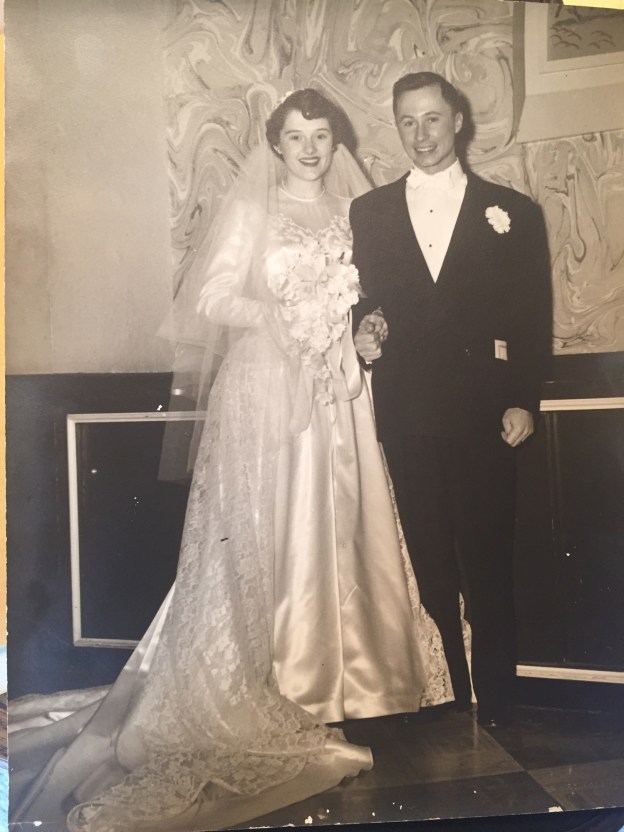
After his enlistment, he applied for admission to Iowa State College to pursue courses in Veterinary Medicine and obtained a job as a waiter in the girl’s dormitories where he was able to get 3 meals/day, all days of the week.  He was later promoted to head waiter and there he met his future wife, Shirley Ann Bruckner.  They were married on December 26, 1953 at St. Thomas Aquinas in Ames.

He graduated from Veterinary School and the couple moved to Galesville, WI where he worked in Dr. Leonard J. Larson’s practice.  He later took a position for Swift and Company in Chicago, where Shirley’s parents lived and started his family.  He worked for Swift for 6 years and accepted a graduate position at Iowa State in September of 1961.

He went on to have an accomplished 38-year teaching career at Iowa State and retired from the College of Veterinary Medicine (CVM) in 1998.  During his career, he won several awards for outstanding teaching, and was selected ISU-CVM Professor of the Year in 1967 and the ISU Outstanding Teaching Award in 1970.  In 2018, Dr. Reece was the recipient of the William P. Switzer Award recognizing his contributions to society and to the college.

He was instrumental in influencing admissions policies and decisions to create more opportunities for women in the veterinary field, which is now approximately 63% female.  He authored several textbooks still in use today and that are published in multiple languages.

He served as an interim head of Tuskegee Veterinary school and was a visiting professor at the University of Glasgow, Scotland.  He established a student exchange program between Glasgow and Iowa State benefitting dozens of students and often hosted students in his home.

Every Doctor of Veterinary Medicine (DVM) student took his physiology course and he taught over 2,000 DVM students.  The college’s advising award is named in his honor.  He was a caring man, always taking time to know the name of everyone he interacted with.  One of his colleagues said, “I can’t think of anyone that represents all that is well and good with the ideals of the veterinary profession and the ISU CVM more than Dr. Reece.  A true Gentle Doctor.”

He often said that he couldn’t have planned a better life and that it was the Hand of God that guided him and his family.  He was proud of his parents, his agricultural background, and his vocational choice in veterinary medicine and the opportunities it afforded.  The collegiality of the profession and of his class of 1954 were always dear to his heart.  Upon his retirement, Shirley presented him a plaque which had the following quotation from Pope John XXIII that summed up his life philosophy:

“See Everything.  Overlook a Great Deal.  Improve a Little.”

Survivors include six daughters: Mary Kay Truckenmiller (Steve) of Ames, Kathy Farstad (Jim) of Minneapolis, Barbara Benn (Jim) of Ames, Sara Reece (Jim Denny) of Ames, Anna Herrick (Rob) of Cleveland Ohio, Susan Randall (Mike) of Overland Park Kansas, and one son: William Omar Reece II. (Heather) of Hudson, Wisconsin.  In addition, he is survived by 24 grandchildren and 20 great-grandchildren.  He was preceded in death by his wife and 4 siblings.

It’s Not That I’m Always Right, It’s Just That I’m Never Wrong

My co-worker Jeff has said this in jest over the years, but I realized recently that he was trying to tell me that I have a problem:  A problem with wanting to be right.  Our egos get in the way, afraid that we will be seen as failures if we are wrong.  We fight for it.  We defend our position.  I admit, this has been me before.

Now I’m on the road to recovery—realizing that trying to be right prevents our learning.  I first heard about his concept listening to a Tim Ferris Podcast.  I then read the book, The 15 Habits of Conscious Leadership and the lightbulb went on.

We live in a complicated world with complicated jargon.  People try to explain concepts and we get lost but are afraid to admit it so we nod our heads as if we understand only to leave confused and afraid to seek clarification.

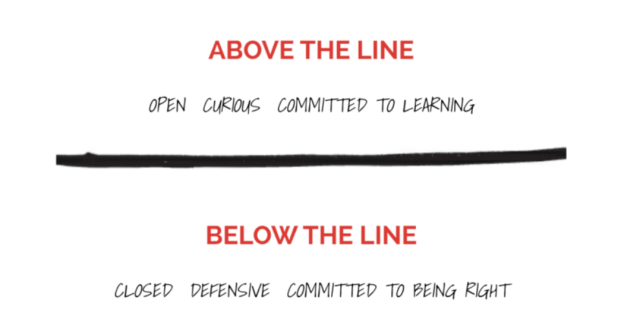
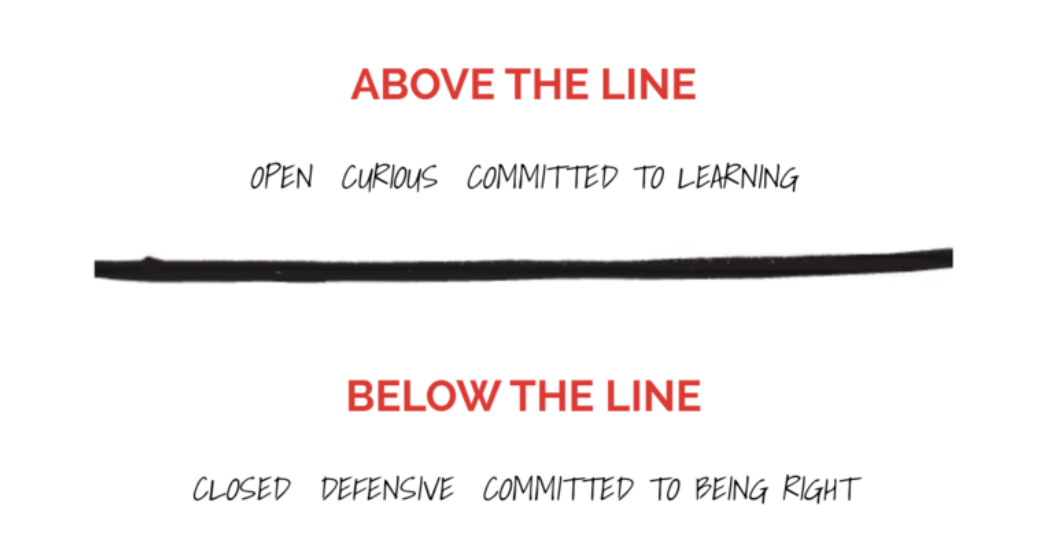
But sometimes it’s the simple things that resonate, like one simple horizontal line and a reference to either being above it or below it.  Not complicated and no confusion.  Below are excerpts from the book. 

Leading from above the line At any point, a leader is either above the line or below the line. If you are above it, you are leading consciously, and if you are below it, you are not. Above the line, one is open, curious, and committed to learning. Below the line, one is closed, defensive, and committed to being right.

Many people lead from below the line – it’s a common state stemming from millions of years of evolution. As soon we we sense the first whiff of conflict our lizard brain kicks in. Fear and Anger rise up, we get defensive and double down on being right. At this point we’re firmly below the line.

Knowing that you’re below the line is more important than being below the line. The first mark of conscious leadership is self-awareness and the search for truth. The second is pausing, taking a second, and shifting yourself into a open and curious state, and rising above the line.

The first of the 15 habits really resonated with me as well.  The habit of taking what the authors call Radical Responsibility:

I commit to taking full responsibility for the circumstances of my life and for my physical, emotional, mental, and spiritual well-being. I commit to supporting others to take full responsibility for their lives.

Taking full responsibility for one’s circumstances (physically, emotionally, mentally, and spiritually) is the foundation of true personal and relational transformation. Blame, shame, and guilt all come from toxic fear.  Toxic fear drives the victim-villain-hero triangle, which keeps leaders and teams below the line.

Conscious leaders and teams take full responsibility—radical responsibility—instead of placing blame.  Radical responsibility means locating the cause and control of our lives in ourselves, not in external events.

Instead of asking “Who’s to blame?”, conscious leaders ask, “What can we learn and how can we grow from this?”  Conscious leaders are open to the possibility that instead of controlling and changing the world, perhaps the world is just right the way it is. This creates huge growth opportunities on a personal and organization level.

Why is this hard?

As mentioned earlier, our egos drive us to want to be right.  The shift required can be significant.  We now have to be open to the possibility that the other person, or other situation may at least be partially right and this curiosity needs to force us above the line to be open to learning.  How many times in your life have you been convinced that you are right, that this other person or place is wrong for you without even giving that person or place a chance.  Challenge yourself to see it another way.

The benefits can be life changing.  With this re-framing, you’re in a much better place personally and professionally.  But it takes practice and patience.  Rarely do any of us get it perfect all the time.  I’ve found a good place to just start is simply recognizing when you’re below the line—it must start with that.  The shift to above the line takes practice but taking radical responsibility for it is a game changer.

So, what’s preventing you?

Rushing to Conclusions Can Create Bad Judgement

We all do it.  Rushing to Judgement is easy to do. We observe something, make assumptions, draw conclusions, believe in those assumptions and take action. This morning a co-worker and I were volunteering offsite and had a call to take. We agreed to take the calls from our parked cars, then afterwards we were going out for a coffee. The call started, and I had not noticed where Jeff had parked. Later on in the call, I assumed Jeff was driving, as I heard car blinkers, etc. and I wondered why he had left. As I obediently stayed in my car, as was the plan, Mollie walked by and I took a moment to rat on Jeff for breaking our deal. The call ended, however, and there was Jeff walking up to my car window. “I thought you took off,” I said. “No, been here the whole time,” Jeff responded. Harvard Business Professor Chris Argyris branded this process the Ladder of Inference, a metaphorical ladder of steps we go through as we process observations (Jeff must be driving and not sitting in his car), draw conclusions (Jeff broke the deal, that jerk) based on what we assume (he didn’t want to have coffee with me), and take action (make sure Mollie knew what Jeff did to me). There’s an inherent danger in doing this because it can create bad judgement. In this case, it did. I was wrong. So what do I mean? This process of moving up the ladder can go pretty quickly. It supposes that if we don’t take the time to collect all the data, or all of the facts, we can pretty much justify in our own minds that what we observe is true, because we believe it to be true based on our previous observations. Why did I select the data that Jeff was in his car instead of actually confirming that he had left the parking lot? Why did I assume that the blinker sound was coming from his car instead of seeing who else was on the call and could have been driving? I should have stopped myself. To avoid this selective bias, we must stop ourselves and work harder to collect more data and facts about the situation. Ask ourselves, what am I missing? Why did I only select this data to use to draw my conclusions but didn’t seek more data? These are good reminders that when we feel ourselves rushing to judgement, the more appropriate thing to do is pause and see what may be on the other side of that story. And as my mother always told me, there’s always two sides to every story. I’m interested to hear from you on this topic. Shoot me a comment/reply/DM. Here’s a 3 minute video on the topic that I’ve sent people before that is a very brief and a good overview.

How Are You (Really) Doing?

I am noticing 90% of the conversations I engage in start with the question “how are you?” Typical answers . . .

  • Good
  • Fine
  • Okay

Usually followed up with, “and you?” and the answers parrot the initial answers . . .

  • Good
  • Fine
  • Okay

Do the same tally with your work interactions.  I’ll bet you will notice the same thing.

The deeper question is how are you really doing? I mean really.

There’s no doubt that with COVID-19 our lives have significantly changed. A therapist on the news today talked about anxiety, stress, depression and fear. Social media is pushing apps like Calm and other tools to help people because of the impact. Our college kids are back—kind of—and our school age kids are also learning and playing in different ways. Most of us are at home. And we’re working full time. Likely by now, we’ve either been impacted directly, or the circle of impact is swirling around us dangerously close.

Given that backdrop I’m not sure things are “good”, “fine”, or “okay”.

It’s super helpful to have a deeper conversation with each other, to reach out and connect beyond the surface. I’m personally missing those interactions as I’m fortunate enough to be in the office most of the time. The ways in which we establish and maintain authentic connections with each other are so very critical right now. If left unchecked, many feel—especially at work—distant and anonymous. As leaders, we must take more control of ensuring everyone, including ourselves, feels connected. Think of the metaphor of being on an airplane for the pre-flight speech that talks about putting your own emergency mask on first. As parents and leaders, asking yourselves about how you are really doing is a way to first address your own state of mind so that you can be in a better position to help others.

I’ll go first. How am I really doing?

This is hard.

I’ve felt more stressed, more pressure to “do it all”. I’m worried about the virus, how long it will take to get a vaccine, and the impact to our healthcare system. I’m not as patient as I need to be.

I’m concerned about all of you, our team, and how you are dealing with it.

I suspect we try to put a good “game face” on which is why we say we’re “good, fine or okay”. We think it helps at work to get right to business, the PowerPoints, meetings, etc. And for some that helps. But do we rest? Do we stop and take time to think? Have there been any positives coming out of this that we’ll take forward forever? Conversely, are there things or patterns that this has told us are ready to stop or change for good?

I’m recommending that we ask each other these deeper questions, that we take the time to really understand how people are doing. Don’t take the easy way out. I think it requires an investment in others. Take time to reach out to those you are thinking about, or start your next meeting with a deeper level check-in, perhaps allowing people to recognize someone else for their contributions.

I’d suspect that we’re all in the same boat. If anyone wants to talk, check in, and share how you are really doing, I’m willing to meet and talk with anyone—it’s that important to me. The better we can relate to each other, the better we will be at getting through this together.

Stay safe and feel free to post replies about what is going on with you and I look forward to hearing from many of you.  One of my goals is to revive my blogging practice in September 2020.


Unwavering Commitment on an Icy Day

This weekend we had some weather that made it impossible to drive. Travel was not advised in our area, and public transportation was stopped because it was so bad. This reminded me of one day around 1980 when I was a kid growing up in Ames, Iowa.

On that day, travel was not advised as well; however, that day wasn’t just a day, it was Palm Sunday. Growing up in a Catholic home, every Sunday was important, but Palm Sunday is one of those special Sundays—not quite like Super Bowl Sunday, but definitely comparable to the conference playoffs.

Our home church, St. Cecilia, was about 4 miles away. With no car travel possible, I’m sure that I thought I had this free-of-church Sunday in the bag. After all, if you can’t drive, you can’t go to church.

Wrong.

My mother informed us that we were going to St. Thomas that morning. St. Thomas was the second Catholic church in town, and on campus at Iowa State, about 2 miles from our house.

“But how are we going to get there?”, I pleaded.

“We’re walking,” said my mother.

And so we walked.

Today as I reflected about that Palm Sunday, the story was less about religious conviction and more about simply demonstrating an  unwavering commitment.

All of us could commit to things in our life in a more unwavering way. But those justifications and excuses always get in the way, convincing us why giving less than 100% effort to something is okay. It could be our school work, or our relationships, or our work, or the need to lose that weight, or to exercise more, or to listen, or to just give the person sitting next to you your full attention.

As real opportunities to demonstrate your unwavering commitment present themselves in 2020, what are you going to do–talk yourself into staying at home or walk?